

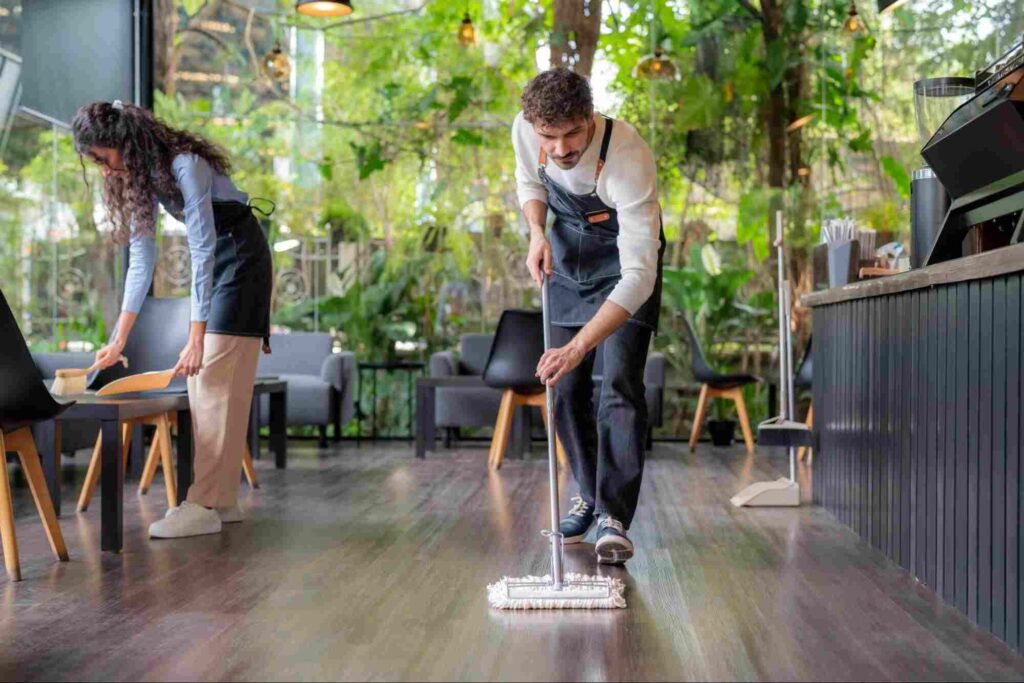
Laminate flooring is a practical choice for offices, retail stores, reception areas, and other commercial spaces because it provides an attractive finish while standing up to everyday activity. However, constant foot traffic can introduce dirt, grit, spills, and moisture that gradually affect its appearance. Knowing how to deep clean laminate floors properly helps businesses maintain a professional environment while protecting their flooring investment.
Deep cleaning requires more than routine sweeping or mopping. The right process removes accumulated soil without exposing laminate to excessive moisture or harsh cleaning products that could damage its protective surface.
Why Do High-Traffic Laminate Floors Need Deep Cleaning?
Commercial flooring experiences significantly more wear than flooring in most residential environments. Dirt and grit brought in on footwear can act as abrasives, while spills and improper cleaning can leave stains, streaks, or residue.
Regular maintenance helps control everyday debris, but periodic deep cleaning addresses buildup that routine care may leave behind. Businesses developing a broader floor maintenance strategy can review Cleaning and Maintaining Your Floors for additional guidance on protecting different commercial flooring surfaces.
What Is the Best Way to Deep Clean Laminate Floors?
Before deep cleaning begins, check the flooring manufacturer’s care recommendations. Laminate is particularly sensitive to excess water, so the goal is to clean thoroughly while controlling moisture.
A practical process to deep clean laminate floors includes:
● Remove loose dirt and grit with a vacuum or microfiber dust mop
● Inspect the floor for stains, spills, and heavily soiled traffic patterns
● Spot clean problem areas with a laminate-safe cleaning solution
● Apply an appropriate cleaner using a lightly damp microfiber mop
● Work in manageable sections and avoid allowing liquid to pool
● Address corners and edges where dirt commonly accumulates
● Dry remaining moisture promptly with a clean microfiber cloth or mop
● Inspect the finished surface for streaks or remaining residue
Avoid abrasive pads, harsh chemicals, and steam cleaning unless specifically approved by the flooring manufacturer. These methods can damage the surface or allow moisture to enter seams.
How Should Stains and High-Traffic Areas Be Managed?
Entrances, checkout areas, corridors, reception spaces, and employee work areas usually require more attention because they receive continuous foot traffic. Promptly removing spills helps prevent staining and reduces the risk of moisture penetrating between laminate planks.
Entrance mats can also reduce the amount of grit and moisture tracked through a facility. Routine vacuuming or dust mopping between deeper cleanings prevents abrasive particles from accumulating. Routine floor care can also be incorporated into professional Janitorial Cleaning Services to help control tracked-in dirt, address spills promptly, and maintain high-traffic flooring between scheduled deep cleanings.
When Should Businesses Use Professional Floor Cleaning?
High-traffic commercial environments can make consistent floor maintenance challenging, particularly when cleaning must be completed outside business hours or around customers and employees. Professional cleaners can assess flooring condition, traffic patterns, and manufacturer recommendations before determining an appropriate cleaning process and schedule.
Professional Floor Care and Maintenance can complement daily cleaning by addressing accumulated dirt and helping businesses maintain consistent standards across larger facilities. Businesses considering professional support can also explore Full-Service Floor Cleaning to understand the benefits of a more comprehensive approach to commercial floor care.
Keep High-Traffic Laminate Floors Looking Their Best
Learning how to deep clean laminate floors correctly helps businesses protect their flooring from dirt buildup, stains, and premature wear. Consistent maintenance, careful moisture control, and periodic professional cleaning can help preserve laminate surfaces while keeping busy offices, retail stores, and other commercial spaces looking clean and professional.
When high foot traffic makes routine floor care difficult to manage, professional support can help maintain consistent results without risking damage from excessive moisture or improper cleaning methods. Contact Regency Cleaning Services to discuss a commercial laminate floor cleaning plan designed around your flooring condition, traffic levels, operating schedule, and ongoing maintenance needs.