
Laminate flooring offers businesses a durable, attractive surface for offices, retail spaces, reception areas, and other commercial environments. However, improper cleaning can leave streaks, dull the finish, or allow moisture to penetrate the seams. Understanding how to deep clean laminate floors safely helps businesses remove accumulated dirt while protecting the flooring’s appearance and long-term performance.
Unlike some hard flooring materials, laminate should not be saturated during cleaning. A careful approach that combines regular maintenance, appropriate cleaning products, and controlled moisture can help prevent avoidable surface damage.
What Can Damage Laminate Flooring During Cleaning?
Laminate flooring has a protective wear layer designed to withstand everyday activity, but incorrect cleaning methods can compromise its appearance. Excessive water is a particular concern because moisture can enter seams and contribute to swelling or warping.
Abrasive pads, harsh chemicals, waxes, and unsuitable cleaning products can also leave residue or damage the finish. Before using any product or equipment, businesses should review the flooring manufacturer’s care recommendations. For broader maintenance guidance, Cleaning and Maintaining Your Floors explains how proper cleaning practices can help preserve different commercial flooring surfaces.
How to Deep Clean Laminate Floors Safely
Effective deep cleaning begins with removing loose debris before applying moisture. This prevents grit from being dragged across the surface and potentially causing scratches.
When determining how to deep clean laminate floors, follow these steps:
● Vacuum or dry mop to remove dust, grit, and loose debris
● Inspect the flooring for spills, stains, and damaged areas
● Spot clean stains using a laminate-safe product
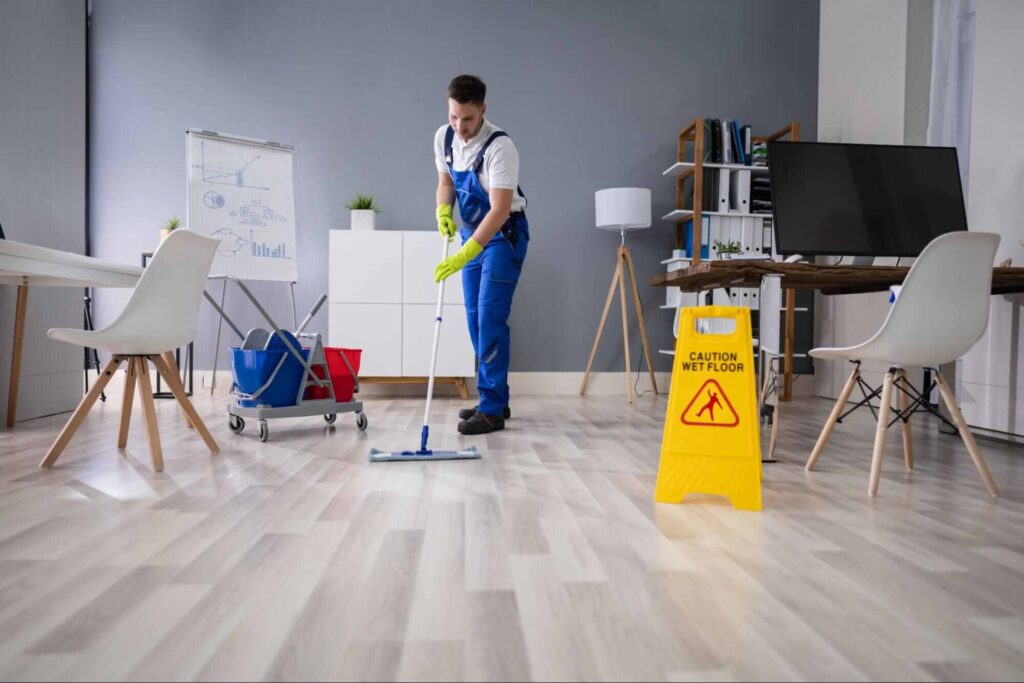
● Apply an approved cleaning solution with a lightly damp microfiber mop
● Clean small sections at a time without saturating the surface
● Pay additional attention to entrances and other high-traffic areas
● Remove remaining moisture promptly with a clean microfiber mop or cloth
● Allow the surface to dry completely before reopening the area to traffic
Steam cleaning should generally be avoided unless the flooring manufacturer specifically approves it. Heat and moisture can penetrate seams and potentially affect laminate construction.
How Can Businesses Protect Laminate Floors Between Deep Cleanings?
Preventive maintenance reduces the amount of intensive cleaning laminate flooring requires. Entrance mats can capture dirt and moisture before they spread throughout the facility, while regular vacuuming or dust mopping removes abrasive particles.
Professional Janitorial Cleaning Services can also support routine floor maintenance by helping businesses manage tracked-in debris, spills, and daily cleaning requirements.
When Is Professional Floor Care a Better Option?
Businesses may benefit from professional cleaning when laminate flooring experiences substantial traffic, recurring stains, widespread residue, or inconsistent results from routine maintenance. Professional cleaners can evaluate the flooring condition and manufacturer requirements before choosing an appropriate method.
Professional Floor Care and Maintenance can help businesses maintain high-traffic surfaces while reducing the risk of inappropriate products or techniques. Full-Service Floor Cleaning also provides additional insight into the benefits of professional commercial floor care.
Protect Your Laminate Flooring with the Right Cleaning Approach
Understanding how to deep clean laminate floors safely is essential for protecting their appearance, durability, and service life. Controlling moisture, choosing suitable products, removing abrasive debris, and responding quickly to spills can help businesses avoid unnecessary surface damage.
When routine maintenance is no longer enough, professional floor care can provide a cleaning approach suited to the condition and demands of your laminate flooring. Contact Regency Cleaning Services to discuss a laminate floor cleaning and maintenance plan designed around your floor condition, traffic levels, operating schedule, and long-term care requirements.