
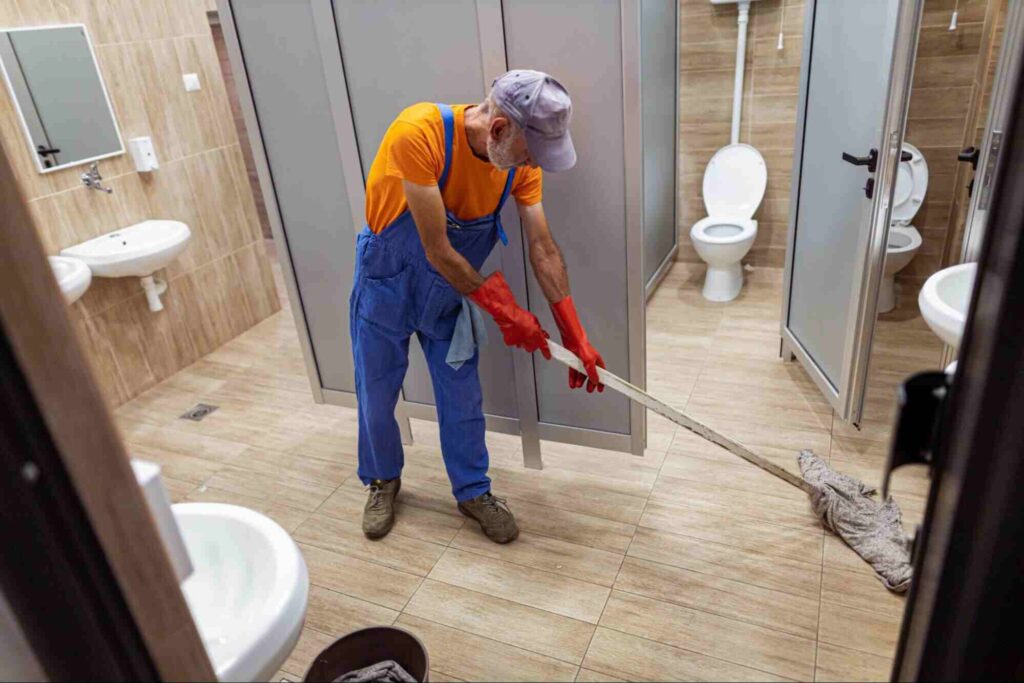
Commercial restrooms can experience steady traffic throughout the workday, making consistent cleaning important for hygiene, appearance, and user comfort. Offices, retail facilities, restaurants, and other busy properties need a structured bathroom cleaning checklist that addresses surfaces, fixtures, supplies, and sanitation throughout operating hours.
A checklist also helps facility managers establish clear expectations for cleaning teams. Rather than relying on occasional visual checks, businesses can create a repeatable process based on restroom traffic, facility requirements, and areas most likely to require frequent attention.
What Should Be Included in a Commercial Bathroom Cleaning Checklist?
Restroom cleaning should address both visible cleanliness and frequently touched surfaces. Cleaning teams should work systematically while using appropriate products and following product instructions for cleaning and disinfecting.
A practical bathroom cleaning checklist can include:
● Remove waste and replace bin liners as required
● Clean and disinfect toilets, urinals, sinks, faucets, and appropriate high-touch surfaces
● Wipe stall doors, partitions, handles, dispensers, and other frequently touched areas
● Clean mirrors and other glass surfaces
● Remove visible soil, soap residue, and buildup from appropriate fixtures and surfaces
● Refill toilet paper, soap, paper towels, and other restroom supplies
● Clean counters and accessible shelving
● Sweep or vacuum loose debris before cleaning floors
● Mop floors using products suitable for the flooring material
● Check corners, baseboards, and areas around fixtures for overlooked dirt
● Inspect for odours, spills, leaks, or maintenance concerns
● Complete a final check before reopening or leaving the restroom
For facilities that periodically require more detailed attention, a Deep Cleaning Checklist can help identify areas and tasks that may fall outside everyday cleaning routines.
How Often Should High-Traffic Restrooms Be Cleaned?
There is no single cleaning frequency that suits every commercial restroom. Usage can change throughout the day, and a restroom serving a busy retail location may require more frequent attention than one in a smaller office.
Facility managers should consider foot traffic, operating hours, restroom size, recurring problem areas, and the type of business when establishing a schedule. Regular inspections throughout the day can help determine when waste removal, supply replenishment, spot cleaning, floor care, or additional sanitation is necessary. Higher-traffic periods may require more frequent inspections and cleaning, while lower-traffic periods can be managed according to actual restroom conditions and facility requirements.
For more guidance on maintaining commercial washrooms, Cleaning Your Business’s Restrooms: Best Practices for Hygiene and Safety explains important practices for supporting restroom cleanliness and hygiene. Professional Janitorial Cleaning Services can also help businesses maintain consistent restroom cleaning schedules based on facility traffic and ongoing cleaning requirements.
Why Do High-Touch Surfaces Require Consistent Attention?
Door handles, faucets, flush controls, stall latches, dispensers, and other frequently touched surfaces can be contacted by many restroom users throughout the day. Incorporating these areas into routine cleaning helps prevent them from being overlooked during busy periods.
Cleaning teams should also follow product directions, including applicable contact times for disinfectants, rather than simply spraying and immediately wiping a surface. The Importance of Proper Restroom Cleaning provides further insight into why consistent restroom care matters in commercial environments.
Why Should Restroom Supplies Be Part of the Checklist?
A restroom can be visibly clean but still provide a poor user experience when essential supplies are missing. Soap, toilet paper, paper towels, and other required products should therefore be checked during routine inspections.
Tracking recurring shortages can also help facility managers adjust restocking schedules based on actual usage. High-traffic periods may require additional checks so supplies remain available when demand is greatest.
Keep High-Traffic Commercial Restrooms Consistently Maintained
A detailed bathroom cleaning checklist helps businesses coordinate hygiene tasks, supply replenishment, floor care, high-touch surface cleaning, and regular inspections. Cleaning frequency should reflect actual restroom usage rather than relying on the same schedule for every facility or every part of the day.
When high restroom traffic makes consistent cleaning difficult to manage internally, professional support can help maintain a reliable routine. Contact Regency Cleaning Services to discuss a commercial restroom cleaning plan based on your facility traffic, operating hours, sanitation requirements, and ongoing supply needs.