
A well structured commercial cleaning checklist is one of the most important tools for maintaining a safe and efficient facility. Whether you manage an office, warehouse, or retail space, clearly defined daily, weekly, and monthly tasks ensure consistency, improve workplace safety, and protect long term asset value.
Without a documented commercial cleaning checklist, important responsibilities are often overlooked. Missed tasks can lead to safety hazards, compliance concerns, poor air quality, and premature wear on flooring and equipment. A structured approach prevents these issues and supports smooth day to day operations.
Why a Commercial Cleaning Checklist Matters
A commercial cleaning checklist creates accountability and clarity. It outlines what must be cleaned, how frequently, and to what standard. For facility managers and business owners, this reduces service gaps and ensures cleaning aligns with operational needs.
Consistent cleaning lowers slip and fall risks, reduces dust accumulation, and limits the spread of bacteria on high touch surfaces. In warehouses and retail settings where traffic is constant, a reliable commercial cleaning checklist supports both employee safety and customer confidence.
It also improves efficiency. When cleaning teams follow a documented plan, there is less duplication of effort and fewer missed areas. This leads to better results and more predictable facility performance.
Daily Cleaning Tasks
Daily tasks focus on high traffic zones and frequently touched surfaces. Offices, warehouses, and retail buildings all require consistent attention to prevent buildup and maintain a professional environment.
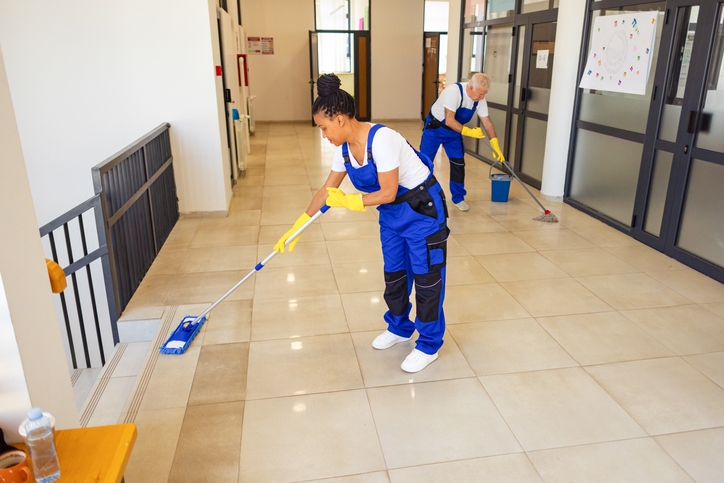
Typical daily responsibilities include disinfecting shared surfaces such as door handles, light switches, and workstations, emptying waste and recycling bins, cleaning and restocking restrooms, sweeping and mopping common areas, and keeping entrances clear of debris. In warehouses, this may include removing dust from operational areas and ensuring loading docks remain clean and safe. In retail spaces, counters, fitting rooms, and customer facing displays require daily cleaning to maintain presentation standards.
These tasks form the foundation of an effective commercial cleaning checklist.
Weekly Cleaning Tasks
Weekly cleaning addresses deeper maintenance needs that go beyond surface level upkeep. These tasks help extend the life of flooring and equipment while maintaining hygiene standards.
Examples of weekly items include detailed restroom sanitation, interior glass cleaning, dusting vents and baseboards, wiping down shelving, and more thorough floor care. Warehouses may require focused cleaning around machinery and storage racking, while offices often include disinfecting shared electronics and meeting spaces.
Regular weekly attention reduces long term wear and prevents the need for reactive cleaning.
Monthly Preventative Tasks
Monthly cleaning protects overall facility condition and supports compliance standards. A comprehensive commercial cleaning checklist should include:
● Carpet and upholstery deep cleaning
● Floor polishing or machine scrubbing
● High dusting of ceilings, vents, and light fixture
● Window and interior glass deep cleaning
● Detailed sanitation of break rooms and kitchen areas
● Inspection and cleaning of storage areas
Scheduling these services monthly helps prevent staining, deterioration, and indoor air quality issues.
Customizing Your Checklist
Every facility has unique cleaning demands. Offices prioritize shared spaces and employee wellness. Warehouses focus on dust control and operational safety. Retail buildings emphasize cleanliness and presentation.
The most effective commercial cleaning checklist is customized to your building size, traffic levels, and regulatory requirements. It should also include documented inspections to maintain consistent quality.
A structured commercial cleaning checklist supports safety, efficiency, and long term facility performance. For a customized plan designed around your operational needs, contact Regency Cleaning Services to schedule a professional consultation.